Roofing estimating resource

Roofing Quote Template: What to Include Before a Homeowner Signs

A roofing quote template should turn a defined roof scope into a clear fixed-price offer the homeowner can review, approve, and sign. It is not the place for messy internal math. It is the customer-facing document that explains what is included, what is excluded, how long the price is valid, what payment is due, and what happens if hidden damage shows up after tear-off.

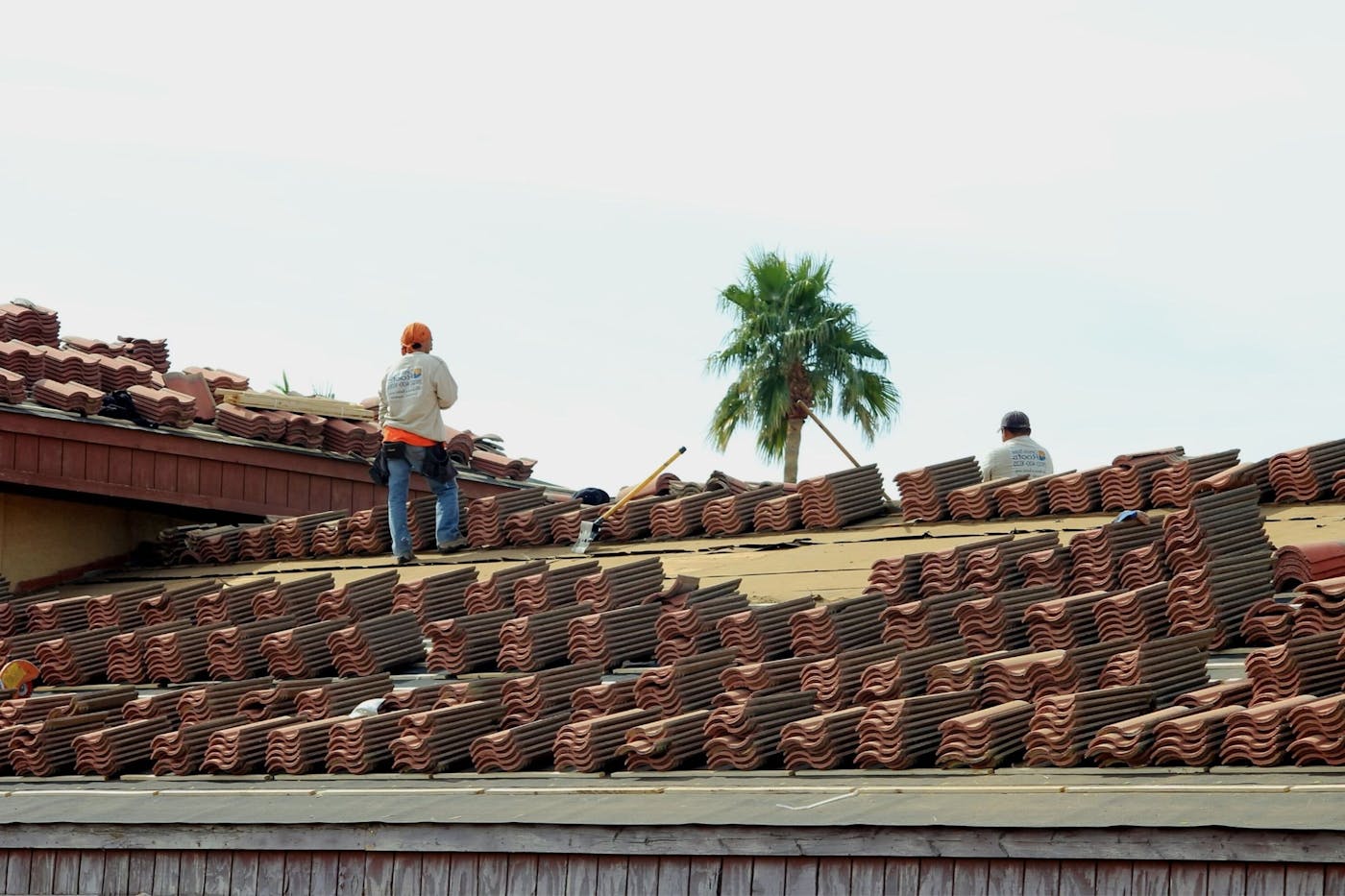
Roofer working on a roof before a roofing quote template is prepared for a homeowner
A quote should explain the work clearly enough that the homeowner knows what they are signing.

Quick answer: what a roofing quote template must include

Quote areaWhat to includeWhy it matters
Company and customer detailsBusiness name, contact details, license number if required, customer name, phone, email, and project address.The quote needs to identify exactly who is doing the work and where the work is happening.
Fixed scopeRoof area, material system, tear-off, deck inspection, underlayment, flashing, ventilation, cleanup, disposal, and exclusions.A fixed price only makes sense when the scope is just as fixed.
Price and payment termsGrand total, deposit, progress payments if used, final payment timing, tax or fee notes, and expiration date.The homeowner should not have to guess when money is due or how long the quote is good.
Change-order languageWritten approval process for hidden decking damage, added roof areas, extra layers, or work outside the original scope.This keeps surprise work from turning into a surprise argument.
Acceptance blockCustomer signature, date, approved total, and any required notices or contract references.A clean approval area turns the quote from a conversation into a documented next step.

Working spreadsheet

Need the file behind the estimate process?

The Premium Roofing Estimating & Proposal Suite gives you the editable workbook: settings matrix, job estimator, formula map, and client proposal tab in one ZIP.

Roofing worker inspecting a roof before preparing a quote for the customer
The inspection creates the facts. The quote turns those facts into a clear offer.

Estimate vs. quote vs. proposal

Roofers, homeowners, and software tools often use estimate, quote, quotation, and proposal like they all mean the same thing. In normal conversation, that happens. In a signed customer document, the wording starts to matter.

An estimate is usually an informed price based on visible conditions and the information available at the time. A quote is usually treated as a firmer offer for a defined scope and price. A proposal may include the sales story, options, photos, warranty details, and a recommended package.

The roofing quote template sits closest to the commitment. If the customer signs it, do not treat it like a loose note from the inside of the truck. Review your local rules and contract requirements, because accepted quotes can become part of the agreement depending on the wording, the job, and the state.

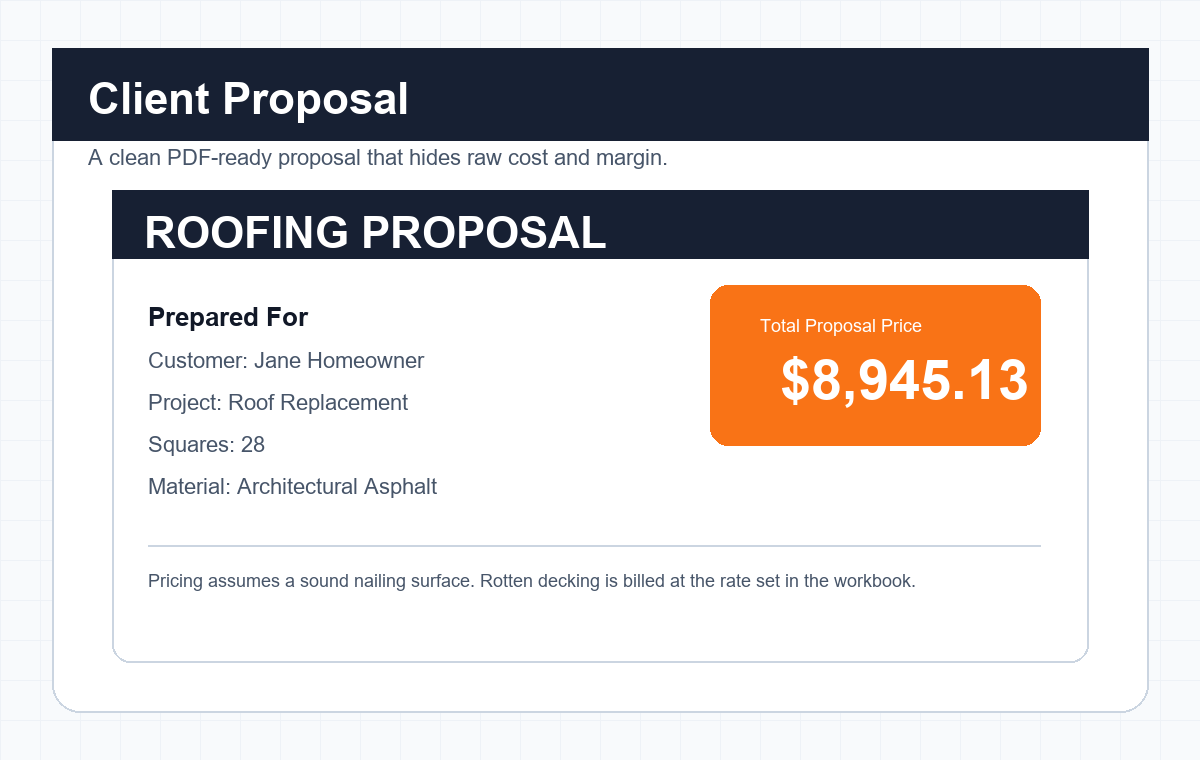
Client-facing roofing proposal tab preview used as a roofing quote template layout
The customer-facing tab should show the decision details, not the raw cost math.

The anatomy of a professional roofing quote layout

A roofing quote layout should be easy for the homeowner to scan and hard for the contractor to misunderstand later. The best layouts are not fancy. They are specific.

SectionWhat goes therePractical note
HeaderCompany name, logo, phone, email, website, address, license or registration number, quote number, and quote date.If your state requires contractor registration or license information, do not hide it in tiny footer text.
Prepared forCustomer name, project address, phone, email, and any billing contact if different.A wrong address on a quote is a small typo with big awkward energy.
Project summaryProject type, roof area, material package, pitch or access note, and visible condition notes.Give the customer a plain-language summary before the scope gets detailed.
Included scopeTear-off, deck inspection, underlayment, ice and water areas where applicable, flashing, drip edge, vents, shingles, disposal, cleanup, and final walkthrough.This is where a roofing contractor quote template earns its keep.
Price and approvalGrand total, deposit or payment schedule, expiration date, signature line, date line, and next step.The quote should make approval obvious without pressuring the homeowner.
Roofline detail showing areas that need clear scope language in a roofing quote template
Scope creep usually starts where the quote got quiet.

How to write a scope that prevents scope creep

Vague is not professional. Vague just makes the customer guess.

A roofing quote should not say replace roof and call it a day. That line is too wide open. It gives the customer, the sales rep, and the crew too much room to imagine different jobs from the same five words.

Better scope language names the roof area, material system, tear-off assumptions, visible limits, and exclusions. For example: Remove one existing shingle layer from the main house roof area, inspect exposed decking, install synthetic underlayment, install architectural asphalt shingles, replace standard pipe boots, install drip edge where accessible, remove normal roofing debris, and clean the work area at completion.

That is less cute than replace roof. It is also less likely to become a Monday morning argument about whether the detached garage, porch roof, or old rotten decking was supposed to be included for free.

Scope items your roofing quotation template should name

This is the part many free quote generators rush through. A real roofing quotation template needs enough detail to keep the customer and crew looking at the same job.

Roof area included, such as main house only, garage included, porch excluded, addition included, or specific slope areas.
Tear-off assumptions, including number of layers included and what happens if extra layers are found.
Deck inspection language and the per-sheet rate for rotten or damaged decking replacement.
Underlayment type, ice and water shield areas if used, starter shingles, ridge cap, and ventilation details.
Flashing, valleys, pipe boots, wall transitions, skylight notes, chimney notes, and drip edge details.
Material brand or package, color selection process, and any substitution rules if materials are unavailable.
Cleanup, debris removal, dumpster access, magnet sweep, and final walkthrough.
Exclusions, such as structural repairs, interior damage, gutters, fascia, soffit, solar panels, satellite dishes, or work not listed.


Fixed price does not mean unlimited work

A fixed quote should protect both sides. The homeowner gets a clear price for the listed scope. The roofer gets a written way to handle work that was not visible or included.

SituationHow the quote should handle itWhy
Rotten decking found after tear-offState the per-sheet replacement rate and require written approval or a written change order before extra work begins.The customer hears the rule before the plywood is already on the truck.
Extra roof area requested laterTreat it as added scope with a separate written price.A quote for the main roof should not quietly become a quote for every attached surface.
More tear-off layers than expectedName how many layers are included and how extra layers are priced.Second-layer labor and disposal are not imaginary. They just become invisible when the quote ignores them.
Material change after approvalRequire written confirmation for upgraded shingles, color changes, accessories, or substitutions.The final installed system should match the approved paper trail.
Roofing crew working on materials that should be reflected in quote payment terms
Payment terms should be boring in the best possible way: clear, plain, and reviewed.

Payment terms and the acceptance block

The payment section should not feel like a treasure map. The customer should know the total, what is due to start, what is due during the job if progress payments are used, and what is due at completion.

Do not copy a deposit percentage from another contractor and assume it is fine. Deposit limits and home improvement contract rules vary by state and project type. Some jobs may also involve cancellation notices, financing disclosures, or required written terms.

The acceptance block should include the approved total, customer signature, date, and a plain next step. If a separate contract is required after the quote is accepted, say that. If the signed quote itself becomes the work authorization, make sure the language has been reviewed for your area.

What the customer should see vs. what stays internal

A roofing quote example should look clean from the customer side. It does not need to expose every internal cost lever inside the company.

Customer-facing quoteInternal estimating file
Scope of work, project address, selected material package, total price, payment schedule, exclusions, change-order notes, warranty references, and approval fields.Supplier material costs, crew labor rates, gross margin target, projected profit, pitch multiplier details, and raw formula logic.
Enough detail to understand what is included and approve the job.Enough detail for the owner or estimator to know the quote protects the business.
Roof shingles detail showing why roofing quote template material wording matters
Material details should be named before they become a comparison problem.

Common roofing quote mistakes

Most quote mistakes look harmless when the document is sent. They get expensive after the customer signs.

Calling the document a fixed quote while leaving the scope vague.
Failing to state how long the quote is valid.
Not listing exclusions for decking, gutters, fascia, soffit, structural work, skylights, or interior repairs.
Showing too much internal cost detail and inviting a line-by-line negotiation over your business model.
Using the same payment terms for every job without checking local rules.
Forgetting the approval block, signature line, date line, or next step.
Adding legal-sounding language that nobody in the company understands.
Sending a beautiful PDF that does not match the actual estimate behind it.

Auto-generating quotes from the estimate data

The cleanest quote process starts before the quote page. The internal estimate should already know the roof measurements, material package, pitch, tear-off layers, adders, permit fees, margin target, and final price.

Then the quote template should pull only the customer-facing details into a separate proposal view: customer name, project address, project summary, included scope, total price, deposit, assumptions, exclusions, and signature fields.

That is why the Premium Roofing Estimating & Proposal Suite includes a Client Proposal tab. The estimator can work in the internal pricing area, then use the proposal tab as the polished roofing contractor quote template. The homeowner sees the clear document. The raw math stays where it belongs.

When a quote template is not enough

A roofing quote template is useful for clear residential repairs, standard replacements, and jobs where the visible scope can be written plainly. It is not a substitute for a contract review, a license requirement, insurance estimating rules, financing disclosures, engineering issues, or legal advice.

If the job involves large commercial work, insurance restoration, structural concerns, multiple trades, financing, public bid rules, or unusual payment terms, the quote may need to become part of a larger contract package.

A template is a starting point, not a personality. Edit it for the actual roof, the actual customer, and the actual rules in your area.

FAQ

Is a roofing quote legally binding?

A roofing quote can become legally important when it is accepted or signed, but the exact effect depends on the wording, local law, and whether a separate contract is required. Treat a quote like a serious customer document and review local contract rules before using it as a work authorization.

How long should a roofing quote be valid?

Many roofing companies use a short expiration window because material prices, labor availability, fuel, and supplier terms can change. The right window depends on your market and job type. The quote should state the exact valid-until date instead of leaving it open-ended.

Should I break down labor and material prices on a roofing quote?

You should give enough detail for the customer to understand the scope and compare the offer. You do not always need to reveal every supplier cost, crew rate, or internal margin. Many roofers show the scope clearly and present one total proposal price.

What happens if hidden damage is found after a quote is signed?

The quote should explain how hidden damage is handled before the job starts. Common language includes a written change-order process and a set rate for rotten decking replacement or other added work discovered after tear-off.

What is the difference between a roofing quote and a roofing estimate?

An estimate is usually an informed approximation based on visible conditions. A quote usually sounds firmer because it offers a price for a defined scope. In practice, terminology varies, so the document should clearly state whether the price can change and under what conditions.

What should a roofing contractor quote template include?

It should include company details, customer details, project address, quote date, expiration date, roof summary, fixed scope, materials, exclusions, total price, deposit or payment terms, change-order language, warranty references, and customer approval fields.

Helpful outside references

Disclaimer: This is a drafting and workflow resource, not legal, tax, accounting, insurance, or construction advice. Home improvement contract rules, deposit limits, cancellation notices, license requirements, change-order rules, financing disclosures, and quote enforceability vary by state and job type. Review your local requirements before sending or accepting any roofing quote.