What should be included in a roofing proposal?
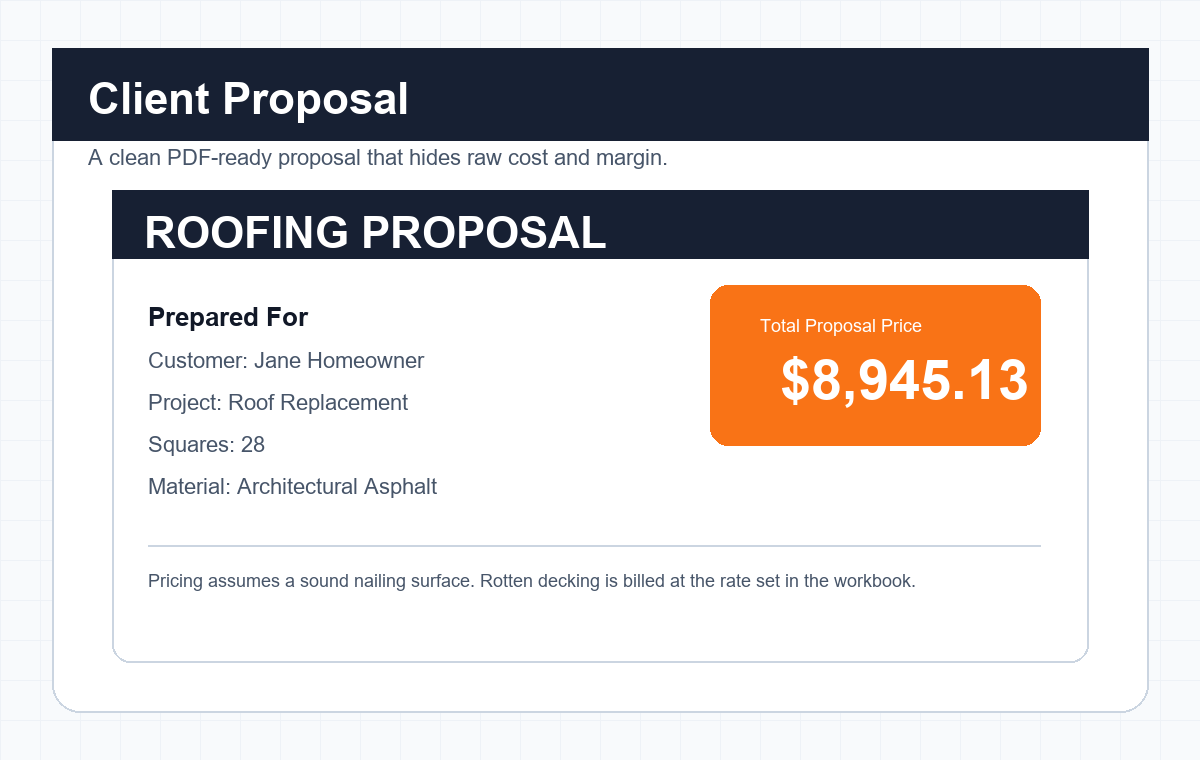
A roofing proposal should include customer details, property address, roof condition summary, photos if useful, scope of work, material options, warranty references, company credentials, project timeline, cleanup plan, total price or tiered options, payment terms, expiration date, change-order language, and approval fields.
How do you structure a roofing bid proposal?
Start with the project summary, then explain the roof condition, recommended scope, material specifications, pricing options, schedule, exclusions, terms, and signature area. If the proposal becomes part of the contract, review local requirements before using it.
Why should a roofer offer tiered pricing options?
Tiered options let a homeowner compare different levels of value instead of making only a yes-or-no decision on one price. The tiers should be honest and useful: each option needs a real difference in material, warranty path, service, or scope.
How do I turn a roofing proposal into a legal contract?
A signed proposal may become part of the agreement, but contract rules vary by state and job type. Many roofing companies use the proposal for sales approval, then move the approved scope into a formal contract or work order with required notices, payment terms, and signatures.
What is the difference between a roofing proposal and a roofing quote?
A roofing quote usually focuses on a fixed scope and price. A roofing proposal is broader and may include photos, options, company proof, warranty explanations, process details, and a recommendation before the customer approves the work.
Can I use a free roofing proposal template?
Yes, a free roofing proposal template can be a useful starting point. Edit it for the actual roof, your local requirements, your real credentials, your material options, and the scope you are willing to stand behind.
What is the difference between a roofing bid template and a roofing proposal template?
A roofing bid template is usually more formal and focused on scope, assumptions, alternates, price, and acceptance terms. A roofing proposal template can include more sales context, photos, proof, options, process notes, and recommendation language.
What should a commercial roofing proposal template include?
A commercial roofing proposal template should include roof areas, system details, access and staging notes, safety requirements, schedule impact, tenant or business disruption notes, alternates, warranty path, exclusions, payment terms, and approval requirements.