Roofing estimating resource

Roof Estimate Sample: A Completed Roofing Estimate Example

A roof estimate sample should show the whole path from roof measurements to customer price. This mock example uses a 2,700 square foot residential asphalt shingle replacement, a 12% waste factor, one tear-off layer, standard pitch, internal line items, and a final homeowner proposal price of $14,250. It is a teaching sample, not a universal price recommendation.

Roofing worker inspecting a roof before a completed roof estimate sample is prepared
A useful sample estimate shows where the number came from before it becomes a proposal.

Quick answer: completed roof estimate sample snapshot

Estimate areaSample valueWhat it means
Project typeResidential architectural asphalt shingle replacementThis sample is built around a common replacement job, not tile, metal, flat roofing, or insurance supplement work.
Measured roof area2,700 sq. ft. / 27 measured squaresRoofing squares are based on 100 square feet of roof surface.
Waste factor12%27 squares x 1.12 = 30.24 squares, rounded up to 31 billable material squares.
Internal subtotal cost$9,262.50This mock subtotal includes materials, labor, disposal, linear adders, permit, and setup assumptions.
Target gross margin35%The final customer price uses true gross margin math, not a simple markup shortcut.
Final proposal price$14,250This is the clean customer-facing price in the sample proposal view.

Working spreadsheet

Need the file behind the estimate process?

The Premium Roofing Estimating & Proposal Suite gives you the editable workbook: settings matrix, job estimator, formula map, and client proposal tab in one ZIP.

Roofer working on a roof used as a roof replacement estimate sample
The sample job starts with real roof variables, not a blank price box.

The 30-square project profile

This completed roofing estimate sample uses the kind of residential roof many contractors would casually describe as a 30-square job. The measured surface area is 2,700 square feet, which equals 27 measured squares before waste.

The sample roof has a standard 6/12 pitch, one layer of old asphalt shingles, normal driveway access, and no visible structural repairs included in the base scope. The material package is architectural asphalt shingles with standard underlayment and accessory assumptions.

Do not copy the price blindly. Local labor, material costs, code rules, dump fees, access, roof complexity, and warranty requirements can change the number fast. A copied estimate is like a borrowed ladder. It might work, but you better check it before you climb.

Waste math in the roofing estimate example

A completed roofing estimate sample should show how the roof moves from square feet to billable material squares. This is where a lot of quiet under-ordering starts.

StepCalculationResult
Measured roof area2,700 sq. ft. / 10027 measured squares
Waste factor27 measured squares x 12%3.24 waste squares
Material before rounding27 + 3.2430.24 squares
Billable material quantityRound up to whole squares31 billable squares
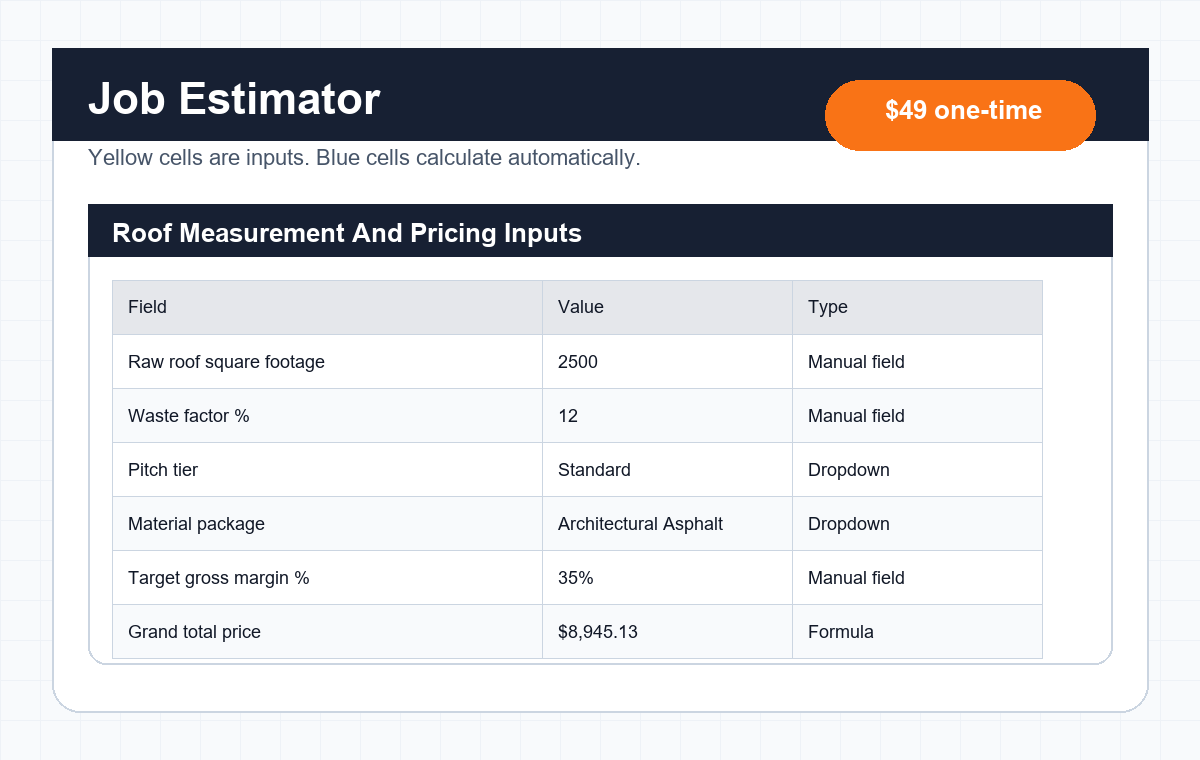
Completed roofing estimate spreadsheet preview with job estimator rows
The internal estimator should show the working math before the proposal gets cleaned up.

Internal roofing estimate line items example

This is the contractor view. These numbers are used to price the job. They do not all need to appear on the customer-facing proposal.

Line itemQuantitySample rateSample total
Architectural asphalt material package31 squares$135.00 / square$4,185.00
Tear-off and disposal31 squares$65.00 / square$2,015.00
Installation labor - standard pitch31 squares$72.50 / square$2,247.50
Linear adders: drip edge, ridge, and valley detailsProject allowanceGrouped allowance$565.00
Municipal permit and job setupFlat costGrouped allowance$250.00
Internal subtotal before marginProject totalMaterials + labor + adders + permit$9,262.50

What each line item is doing

The material package covers the main roofing system components in the sample: shingles, underlayment, starter or accessory assumptions, fasteners, and normal material handling. Some companies break those pieces out separately. Others group them. Either can work if the estimator understands what is inside the number.

Tear-off and disposal covers the old shingle layer coming off the roof and the debris going somewhere legal. It is not glamorous. Neither is taking a full dumpster to the dump. But if the line is missing, the job did not get cheaper. The cost just went into hiding.

Installation labor covers the crew work for the new roof system. In a more detailed estimator, the pitch multiplier would apply to the labor lines where slope actually affects production. It should not blindly inflate permits, material packages, or every cost on the sheet.

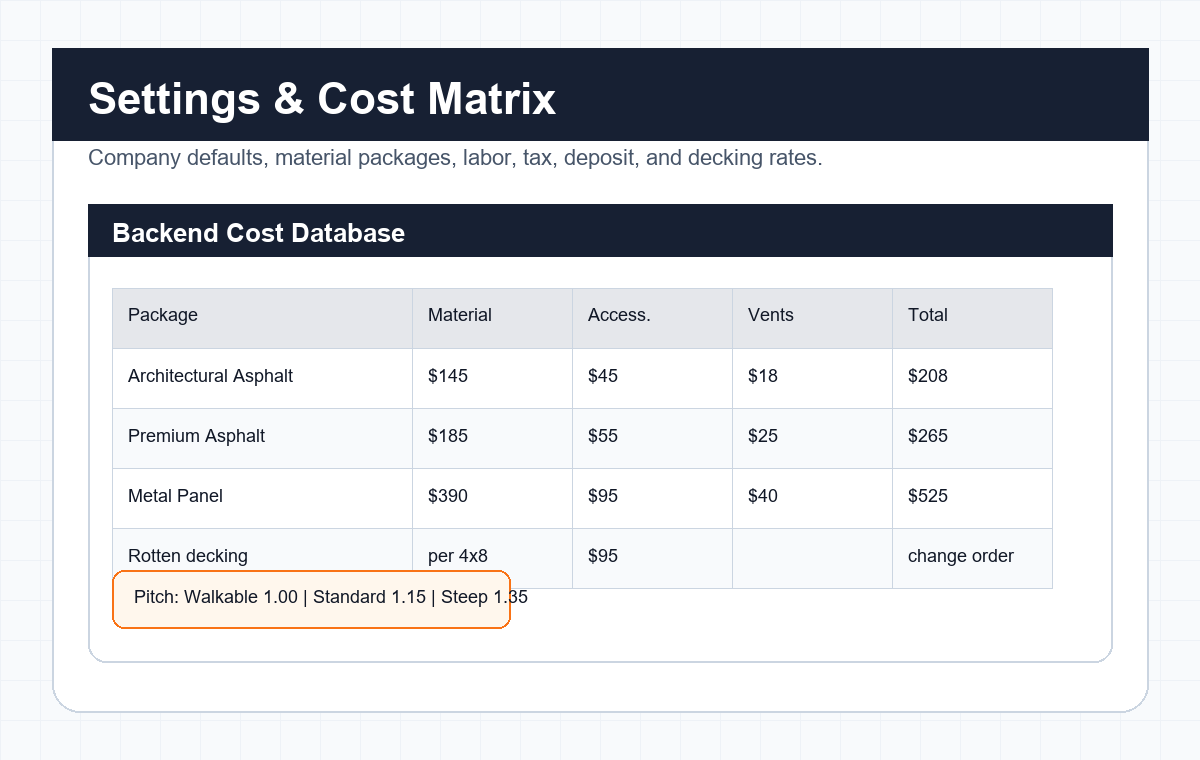
Roofing estimate cost matrix preview used for margin pricing
The final price should come from the cost target you actually mean.

The margin calculation behind the final price

This sample uses true gross margin math. That means the target margin is a percentage of the final selling price, not just a markup added to cost.

Pricing stepFormulaSample result
Internal subtotal costMaterials + labor + disposal + adders + permit$9,262.50
Target gross margin35%0.35
Customer price formula$9,262.50 / (1 - 0.35)$14,250.00
Projected gross profit$14,250.00 - $9,262.50$4,987.50
Price per measured square$14,250.00 / 27 measured squares$527.78
Price per billable square$14,250.00 / 31 billable squares$459.68

Markup is not the same as margin

Here is the awkward part: a 35% markup on $9,262.50 would not create a 35% gross margin.

A 35% markup would price the job at $12,504.38. That leaves $3,241.88 of gross profit. On the final selling price, that is about 25.92% gross margin, not 35%.

Clear beats clever. If the company needs margin-based pricing, the estimate has to use margin-based math. Otherwise the spreadsheet is smiling at you while quietly taking money out of the job.

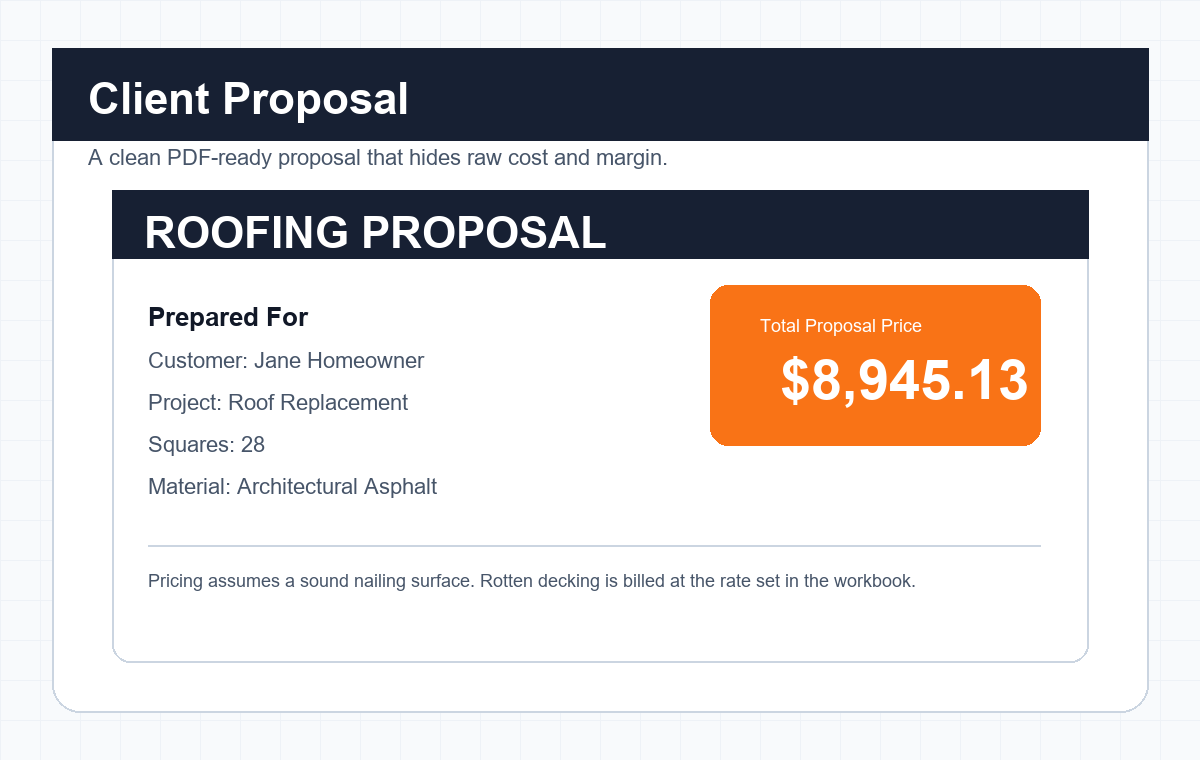
Roofing proposal tab preview showing customer-facing roof estimate sample
The proposal should explain the job without exposing every internal cost lever.

What the homeowner receives

The customer should not receive the messy internal cost table unless your sales process intentionally uses itemized pricing. For many residential jobs, the homeowner view is cleaner.

Proposal sectionSample homeowner-facing copyWhy it belongs
Project summaryRoof replacement for the main residence roof area using architectural asphalt shingles.The customer gets the plain version of the job.
Included scopeRemove one existing asphalt shingle layer, inspect exposed decking, install underlayment, install architectural shingles, address standard ridge and edge details, remove normal roofing debris, and clean the work area.The scope says what the price actually includes.
Total proposal price$14,250.00The homeowner sees one clear proposal price instead of raw cost math.
Estimated deposit$4,275.00 if using a 30% deposit assumptionDeposit rules vary, so this should be reviewed for the state and job type.
Decking change-order noteRotten or damaged decking discovered after tear-off will be reviewed before replacement and billed at the stated per-sheet rate.The customer hears the hidden-damage rule before the roof is open.

What this roof replacement estimate sample teaches

The sample matters because it connects the blank template, spreadsheet, Excel file, quote, and proposal pages into one finished path.

The template gives the estimate a place to hold customer, project, scope, price, and terms.
The spreadsheet does the working math before the customer sees the proposal.
The Excel version lets the same estimate run offline inside a native XLSX file.
The quote view turns the final scope and price into a fixed customer-facing offer.
The proposal view adds context, options, proof, and a cleaner path to approval.
The sample shows how those pieces should agree with each other instead of fighting like five versions of the same file.
Roofline detail that may affect insurance roof estimate sample line items
Insurance estimates often need a different line-item language than retail proposals.

How this changes for insurance work

A retail roof estimate sample and an insurance roof estimate are not always the same document. Insurance work often needs carrier-specific documentation, photos, measurements, code notes, depreciation details, supplement language, and line-item formats the carrier can review.

If the job is insurance-related, do not assume a simple retail proposal is enough. The estimate may need to align with the carrier's scope, approved pricing system, policy terms, local code requirements, and documentation standards.

This page is a retail teaching sample. It can help a contractor understand the math, but insurance restoration work needs its own process and careful review.

How the estimating suite produces this kind of sample

The Premium Roofing Estimating & Proposal Suite is built for this exact workflow. The user enters roof area, waste, pitch, tear-off layers, linear adders, permit fees, margin target, and customer details. The workbook calculates the internal estimate and pushes the usable customer details into the proposal tab.

That means the sample is not just a static example on a page. The same structure can become a working estimate when the numbers change.

It is still a tool, not a brain transplant. The contractor has to review local costs, scope, code, warranty language, payment rules, and the actual roof. The workbook just gives the work a better place to land.

Mistakes to avoid when copying a sample estimate

A sample is useful until someone treats it like gospel. Then it becomes a shortcut with a loose wheel.

Do not copy the sample rates without checking your actual labor, material, dump, permit, and tax costs.
Do not use a 12% waste factor on every roof if the geometry, material, or installation details call for more or less.
Do not show the homeowner internal profit targets unless that is part of your deliberate sales process.
Do not use the same deposit language in every state without checking local rules.
Do not use retail estimate formatting for insurance work without checking carrier requirements.
Do not leave out hidden-damage and decking language just because the sample job assumes clean decking.

When a roof estimate sample is not enough

A completed roofing estimate sample helps you see how a clean residential replacement can be priced and presented. It is not enough for every job.

Steep roofs, complex cut-up roofs, tile, metal, flat roof systems, structural repairs, storm claims, multi-building properties, commercial bids, financing-heavy jobs, and jobs with strict contract rules all need more review.

Use the sample to understand the structure. Then make the real estimate fit the real roof.

FAQ

What should a completed roof estimate sample include?

A completed roof estimate sample should include project details, roof measurements, waste calculation, material quantity, tear-off scope, labor, disposal, adders, permit or setup costs, margin math, final customer price, scope language, payment terms, expiration date, and change-order notes.

How do you calculate waste on a roofing estimate example?

Start with measured roof squares, multiply by the waste percentage, add that waste amount to the measured squares, then round up to the next whole material square. In this sample, 27 measured squares x 12% waste equals 3.24 waste squares, for 30.24 total squares rounded up to 31.

Should a roofing estimate line items example show separate labor and material costs?

Internally, yes. Separate labor, material, disposal, adders, permits, and margin help the contractor check the job. The homeowner-facing proposal may show a cleaner package price if the scope, exclusions, and terms are clear.

How do I format a roof replacement estimate sample for an insurance company?

Insurance estimates often need a detailed line-item format, photos, measurements, code notes, claim details, and carrier-specific documentation. A retail proposal sample may not be enough. Review the carrier requirements, policy terms, and any required estimating format before submitting.

Is $14,250 the right price for a 30-square roof?

Not automatically. The $14,250 figure in this article is a mock teaching number. Real pricing depends on location, materials, labor, roof complexity, access, dump fees, code requirements, warranty path, overhead, and target margin.

What is the difference between measured squares and billable squares?

Measured squares describe the roof area before waste. Billable or material squares include waste and rounding so the contractor orders enough material and prices the job correctly.

Helpful outside references

Disclaimer: This is an estimating workflow example, not legal, tax, accounting, insurance, pricing, or construction advice. Sample rates, waste factors, margins, deposits, warranty language, insurance formatting, permits, code requirements, and change-order terms must be reviewed for the actual job and local rules before sending an estimate to a customer.